


Bike Fit For A New Bike - Pre or Post Purchase?
- CP
- Nov 21, 2023
- 5 min read
Updated: Nov 28, 2023

Ah, it's an age old questions, one of the most common ones we get asked at Cycling Performance UK...
“Should I have a bike fit before or after buying my new bike?”
Whilst a Bike Fit is 100% Essential if you’ve never had one before, our preferred way of working is to get a Bike Fit Before Purchase and this is true for a few reasons.
Additional Costs After Purchase
When you purchase a new bike or even second hand bike from trusted retailers, you’ll likely be supplied with the bike as the manufacturer or former owner specified, regardless of whether this is best suited to you.
There are some shops that will switch out components following a quick 'shop fit' but unless you have measurements from a previous Bike Fit, changes made from that quick overview are unlikely to be quite right. In general, the sales staff just won’t have a deep enough understanding of you and what would be found during the Clinical Assessment section of a Bike Fit, one of the most Fundamental aspects of the Bike Fit Process.
It’s worth noting that you’ll usually have to pay to change the components as they’ll have to be ordered in by a shop at extra cost. Although there are shops who’ll give you money back against some of these parts when new, after they've been ridden, the majority of shops won't exchange parts and a labour charge is often incurred to swap these out.
Aesthetically Pleasing Yet Harder To Work On
Over the last few years, bikes have also become more complex in the form of integrated cable routing through the stem and/or handlebar, internal routing through the frame or the best of all, being supplied with a stock one piece bar-stem that has no adjustability. Whilst bikes may look nicer, their new-found complexity means they’re harder to work on and jobs take longer. This usually means if you have to pay to change some complex parts after collecting your new bike, you’re REALLY going to have to pay.

I’ve spoken to a number of workshops that also agree integrated cabling results in more costly servicing charges due to their complexity. Historically and currently, on a number of bikes, to swap out the headset bearings where parts are around £15-20 can sometimes involve a labour cost of up to £80! This is a result the whole bike’s hydraulic system having to be dismantled to access these parts.
Getting back on track (whilst trying not to rant), labour costs incurred to switch components (in the form or bars, stem, saddle, cranks) before collecting your bike will often be absorbed by the bike shop prior as the bike often needs to be put together after being supplied to them. As such, you can tell them the appropriate bar and stem that needs to be fitted, along with providing the measurements to a good shop and they’ll take care of the entire setup.
It also means once you pick up that bike, there’s nothing you have to worry about as it’s been dialled in and set to your requirements including the saddle height, saddle fore and aft setup, drop to the handlebars (via headset spacers) and different stem angles, handlebar width and reach from saddle to handlebars and shifters/hoods.
Best Frame Size and Bike Style
Undertaking a Bike Fit Prior to Purchase also lets you understand what is going to be the best frame size to choose as well as the best style of bike based on your requirements.
As an example, it’s usually often the case that for a rider, both 54cm and 56cm frames will allow them to achieve their bike fit position but the setup of each will differ quite dramatically with regards to spacers under the stem, stem length and saddle positioning.
If a rider needs a higher front end setup, there’s a great chance the 56cm frame size will be more appropriate vs flipping a stem to positive (pointing upwards).
If they have a shorter reach but still need a higher front end height, then the 54cm will potentially work better with a hover / elevated style bar or on a bike with a more upright geometry such as an Endurance bike.
Rider 'Wants and Needs'
The needs of the rider also have to be taken into account along with where they’ll ride. For us lucky individuals that live around West London, whilst the riding can be amazing, the road surfaces are often not, so opting for that super-stiff, unforgiving Aero Road frame may not be the best choice.
The more aggressive road bikes also tend to have a longer reach and lower front end height when compared to an endurance geometry bike, so unless you have shorter legs relative to torso length or you're very mobile and strong, they're unlikely to be the best choice.
TT and Triathlon
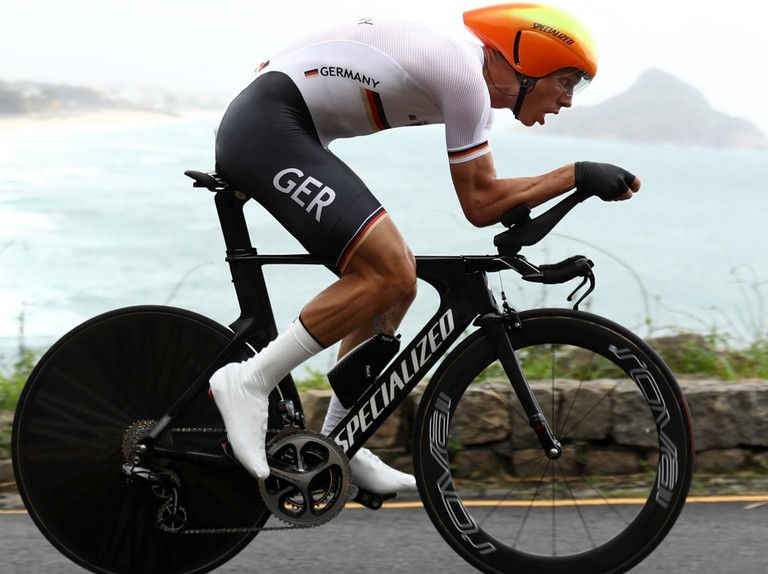
When it comes to choosing the correct frame size, I see more 'issues' with TT or Triathlon bikes where people buy a frame size that’s too big. Whilst this can often result in a reach that’s too long, the biggest issue is not being able to lower the front end enough, especially true when fitting smaller riders. A number of manufacturers have simply stopped producing XS size TT bikes making it much harder to get that balance or comfortable-yet-aero position for smaller riders.
Women’s Road Bikes
Front end height is often an issue when it comes to xxs, xs and small sized women’s road bikes. Commonly, manufacturers make the front end too high (aka Stack height) to be able to achieve a more aggressive position. It seems strange that manufacturers build bikes with the assumption that everyone will want to ride in a very upright and comfortable position; something that simply isn't the case.
On Gravel Bikes Too
The same seems to run true for the front end height on a number of gravel bikes too, frames built with a higher front end often mean a rider needs to choose a smaller frame size than they would on a road bike.
Whilst being more upright for some is a good thing, there’s a balance of riding in a sustainable position vs one that has the rider too high. This actually has the effect of taking the handleabars up and away from the rider whilst tilting their weight balance too far back.
Custom
For the rarer times riders come in with the need or desire to have a custom frame produced, there simply isn’t a way around getting the bike fit first as without it, they won’t have the Frame X & Y Positions (Horizontal and Vertical) to give to the frame manufacturer.
It All Becomes Clear
So, there’s a few good reasons to get your Bike Fit prior to purchasing a new bike but even if you don't, this doesn’t mean it’s too late.
There’s a number of changes that are often required, without which, the bike won’t feel as comfortable as it should AND you won’t ride as well as you could.
If you have an expectation that you’ll need to change the handlebars, stem, often saddle, sometimes seatpost style (setback vs inline) and much less common, crank length, then suggestions made during a Bike Fit won't shock you but it really depends on the bike sizing, what the manufacturer has spec'd and how close you are to this.
If you're interested in finding out more about our Bike Fitting Services or maybe this post has resulted in more questions, worry not, Contact Us Today, we’ll be happy to help.
Ride safe and happy!
Chris


Comments